- Training starts the moment your puppy arrives, with toilet training and their name.
- Socialisation means calm, positive experiences of everyday sights, sounds and people, at your puppy's pace.
- Reward the behaviour you want with treats, toys and praise, and never punish accidents.
- Keep sessions short and fun, a few minutes at a time, several times a day.
- Electric shock collars have been banned for cats and dogs in Wales since 2010, and reward-based methods are the kind way to train.
Where to start
Puppy training does not wait for a class. Dogs Trust advice is that it starts as soon as you bring your dog home, because your puppy is learning from everything that happens, good or bad. The first weeks are about routines, trust and a few simple skills.
Do not try to teach everything at once. Pick two or three things for the first week, such as toilet training, their name and settling in a bed or crate, and add more as your puppy grows in confidence.
Toilet training
Take your puppy to the same spot outside often. The RSPCA suggests going out when they wake up, after meals, after play, after any excitement, before bed, and otherwise every 45 minutes to an hour depending on age. Say a cue word such as "toilet" as they start, then reward straight away.
Stay out for a few minutes afterwards, so your puppy does not learn that going to the toilet ends the fun. Never punish an accident. Shouting teaches a puppy that it is only safe to go when you are not watching. Clean up with a biological washing powder solution rather than strong-smelling products, so the smell does not draw them back. Dogs do not have full bladder control until around 12 months old, so expect some setbacks.
Name, attention and early recall
Teach your puppy that their name means good things. Say it once in a happy voice, and reward the moment they look at you. Practise a few times a day in quiet rooms first.
Early recall builds on the same idea. Crouch down, call your puppy's name and a cue such as "come", and reward generously when they reach you. Never call them to you for something they dislike, such as a telling off or the end of play. Practise indoors and in the garden first, and use a long line once you start outside.
- Use one cue word and stick to it
- Reward every time in the early weeks
- Call once, then make yourself interesting rather than repeating the cue
- Practise little and often, ending on a success
Socialisation: the most important job
Socialisation means helping your puppy learn that the world is safe. Dogs Trust describes this early period as a key stage of development. The aim is calm, positive experiences, not overwhelming ones. Let your puppy watch from a distance, move at their pace and reward confident behaviour.
Your vet will tell you when your puppy can walk on the ground in public after their vaccinations. Before then you can still socialise them: carry them to watch the street, invite calm visitors, and play recordings of everyday sounds quietly while they eat or play.
- People of different ages, including children, people in hats and people with sticks or buggies
- Household sounds such as the hoover, washing machine and doorbell
- Traffic, bikes and busy streets, watched from a safe distance
- Calm, vaccinated adult dogs you know well
- Being handled: paws, ears, mouth and gentle brushing
- Car journeys, short and positive
Settling, alone time and handling
Teach your puppy to relax on a bed or in a crate or pen, with a chew and a calm routine. Dogs Trust advises that learning to feel relaxed and confident when alone is best started while they are still a puppy. Begin with a few seconds out of sight and build up slowly.
Handle your puppy gently every day, rewarding them as you touch their paws, look in their ears and open their mouth. This makes vet visits, grooming and nail clipping much easier later.
Lead walking
Start with the collar or harness and lead at home, so your puppy gets used to wearing them. Reward your puppy for being next to you, and stop moving when the lead goes tight. Move on again when it loosens.
Early walks should be short, with lots of time to sniff and look around. A walk for a young puppy is as much about learning about the world as exercise. A trainer can help if pulling becomes a habit.
Reward-based methods and what to avoid
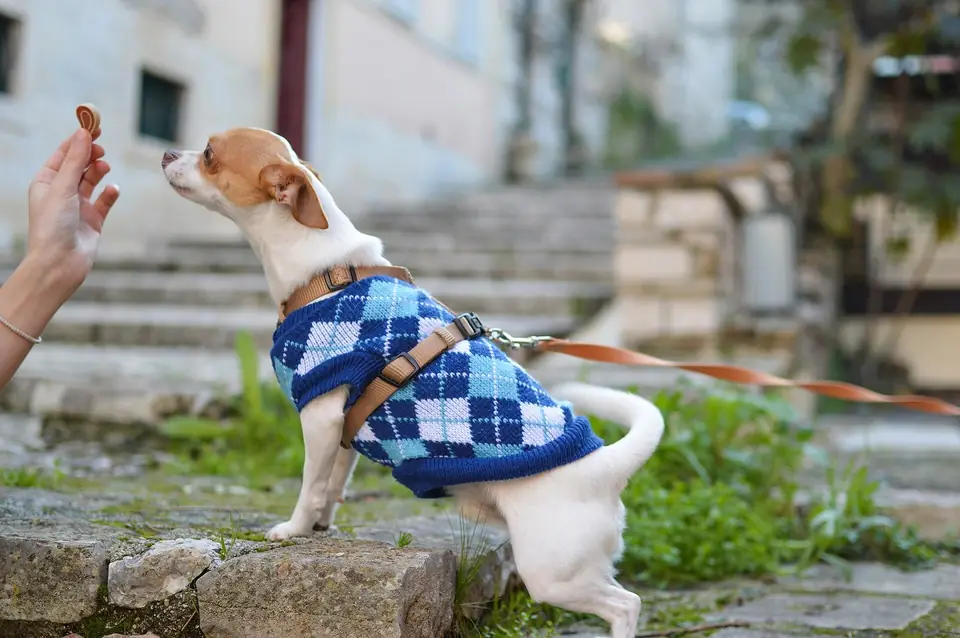
Reward-based training means marking and rewarding the behaviour you want, so your puppy is more likely to repeat it. Use small, tasty treats, toys and praise. If your puppy does something you do not want, such as chewing a shoe, swap it for something they can have and reward that.
Avoid punishment, shouting, jerking the lead or aversive equipment. These can make a puppy fearful and damage trust. Electric shock collars have been banned for cats and dogs in Wales since 2010. Ask any trainer what methods and equipment they use before you book.
How AYS can help
On AYS Concierge you enter your postcode and see dog trainers who cover your area, for sessions at home or in a local park. A puppy starter visit may have a fixed price shown before you book, and for more specific goals you can ask for free quotes with no obligation.
Questions people also ask
How long should puppy training sessions be?
Keep sessions short, usually a few minutes at a time, and repeat them several times a day. Puppies learn quickly but tire fast, and a session that goes on too long can end in frustration. Stop while your puppy is still keen and has just got something right, so they finish on a success.
How long does it take to toilet train a puppy?
It varies. Dogs Trust suggests most dogs are reliably toilet trained after four to six months of consistent work, and some take longer. Dogs do not have full bladder control until around 12 months old, so accidents are normal. If a puppy who was doing well keeps having accidents, ask your vet to rule out a health problem.
When can my puppy go outside for walks?
Your vet will advise when your puppy can safely walk on the ground in public places after their vaccinations. Before then you can still use your garden if it is safe, and carry your puppy out to see and hear the world. These early experiences are an important part of socialisation.
Should I use a crate for my puppy?
A crate or playpen can help with toilet training and give your puppy a safe place to rest, as long as it is introduced gradually and feels like a den, not a punishment. Make it comfortable, reward your puppy for going in, and keep the door open at first. Never leave a puppy shut in for long periods.
- Dogs Trust: Puppy training
- Dogs Trust: How to toilet train your puppy
- RSPCA: How to toilet train your puppy or dog
- Dogs Trust: How to help your puppy get settled into your home
- legislation.gov.uk: The Animal Welfare (Electronic Collars) (Wales) Regulations 2010
Rules can change. Check the official pages above for the latest position.