- There is no national licence for dog walking in England, so your questions do the checking.
- Many councils use Public Spaces Protection Orders to limit how many dogs one person can walk, often four.
- Agree in writing how keys or codes are kept and who to call in an emergency.
- By law your dog must be microchipped and wear a collar and tag with your name and address in public.
- A meet and greet before the first walk lets you and your dog see if the walker is a good fit.
Why the questions matter
A dog walker will have your dog, and often your keys, while you are not there. In England there is no national licence for dog walking, so it is up to you to check how a walker works. The answers to a few direct questions tell you a lot.
A good walker will be glad you asked. They will also have questions for you about your dog's health, habits and recall. If someone seems vague or impatient with your questions, take that as a sign.
Insurance and experience
Ask whether they have public liability insurance that covers dog walking, and whether it includes care, custody and control of dogs that are not their own. Ask to see the certificate, and check the dates.
Ask about experience too. Have they worked with dogs of your dog's size, age and temperament? Do they have a canine first aid course? If your dog is reactive, nervous or very strong, ask how they have handled dogs like that before.
- Do you have insurance for dog walking, and can I see it?
- How long have you been walking dogs, and what breeds do you walk?
- Have you done any canine first aid training?
- Can you give me a reference from another dog owner?
How many dogs at once, and council rules
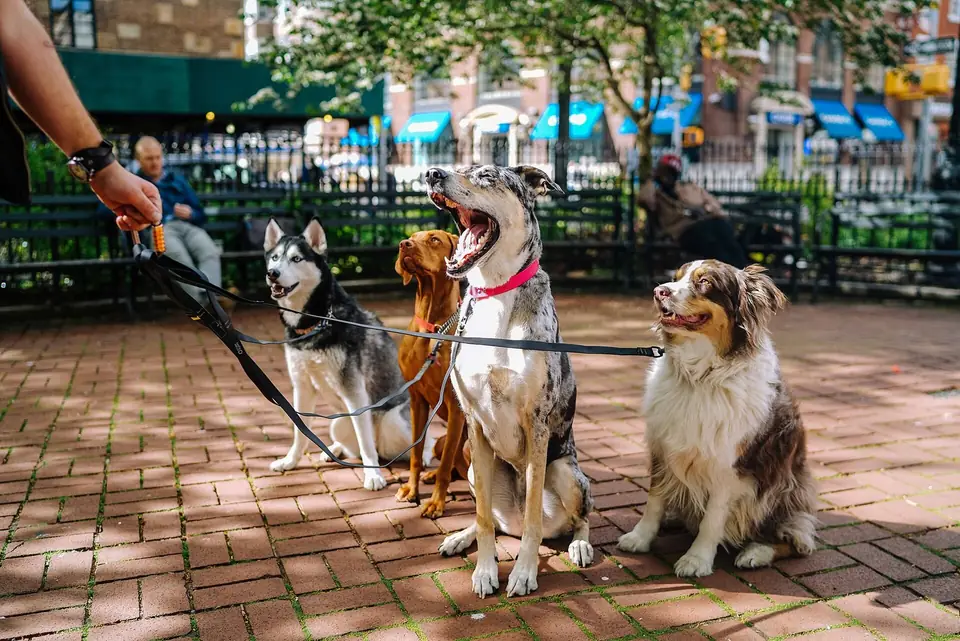
Ask how many dogs they walk at the same time and whether dogs from different homes are walked together. Many councils use Public Spaces Protection Orders to limit how many dogs one person can walk in parks and public spaces. Government guidance confirms that these limits apply to professional dog walkers too. A limit of four is common, though the number varies, and some councils allow more for walkers who hold a permit or meet certain conditions.
Breaking a PSPO can lead to an on the spot fixed penalty notice, or a larger fine if it goes to court. A careful walker will know the rules where they walk, including areas where dogs must be on a lead or are not allowed. If your dog prefers its own company or is still learning, ask for solo walks.
Keys, access and your home
Ask how they store keys and whether keys are labelled with your address. Good practice is to label keys with a code, not an address, and keep them secure. If you use a key safe, ask who knows the code and how it is kept private.
Agree what happens inside your home: which doors to use, whether to give water or food, where to leave towels and leads, and how to set the alarm. Ask whether the same person walks your dog every time, or whether someone else might cover holidays.
Emergencies, health and recall
Ask what they do if your dog is injured, becomes ill or goes missing. They should have your vet's details, an emergency contact and your permission to seek treatment. Ask how they will contact you and how quickly.
Talk honestly about recall. Will your dog be let off lead, and only with your agreement? Many walkers use a long line until they know a dog well. If your dog is an XL Bully, the law in England and Wales says it must be on a lead and muzzled in public, with the lead held by someone aged 16 or over, and the walker must be told.
- What do you do if my dog is hurt or unwell on a walk?
- What happens if a dog runs off or gets into a fight?
- Do you let dogs off lead, and how do you decide?
- How do you keep dogs cool in hot weather?
Microchip and collar tag laws
All dogs in the UK must be microchipped and registered by the time they are 8 weeks old, and you must keep the details up to date, for example after moving house. You can be fined up to £500 if your dog is not microchipped when it should be.
A microchip does not replace a collar. The Control of Dogs Order 1992 says a dog in a public place must wear a collar with the owner's name and address on it or on a tag, with a few exceptions such as some working dogs. Check your dog's tag before handing over to a walker, and add a phone number for peace of mind.
Communication and the meet and greet
Ask how you will hear about each walk. Many walkers send a message or a photo after drop off. Ask how long the walk is, whether the time includes travel, and what happens in bad weather.
A meet and greet before the first booking lets your dog get to know the walker at home. Watch how they approach your dog, and whether they ask about diet, allergies, fears and habits. That conversation is often the clearest sign of how they will look after your dog.
How AYS can help
On AYS Concierge you enter your postcode and see dog walkers who cover your area. Every pro is reviewed by the AYS team and must pass a photo ID check, and pros can show insurance and DBS certificates for the team to review. Your address and phone number are only shared once the booking is confirmed.
Questions people also ask
Does a dog walker need a licence in the UK?
There is no national licence for dog walking in England. Licensing covers activities such as boarding and day care, not walks. Some councils run their own permit schemes for professional walkers, and many limit how many dogs one person can walk through Public Spaces Protection Orders. Ask your walker which rules apply where they go.
Should a dog walker have a DBS check?
It is not a legal requirement for dog walking, but many owners like to see one because the walker will have access to their home. A basic DBS certificate shows unspent criminal convictions. Ask to see the certificate and check the name and date. It is one sign of trust alongside insurance, references and how the walker comes across.
What should I tell a new dog walker about my dog?
Tell them about recall, how your dog behaves with other dogs, people, children and wildlife, and anything they fear or chase. Share health issues, medication, allergies and diet. Give them your vet's details and an emergency contact. Mention any escape habits, such as slipping a collar, so they can use the right harness or lead.
Is a group walk or a solo walk better?
It depends on your dog. Sociable, confident dogs often enjoy a small group. Puppies, older dogs, nervous or reactive dogs, and dogs still learning recall usually do better on solo walks, where the walker can focus on them. Ask how groups are matched by size and play style, and how big the group will be.
- GOV.UK: Get your dog microchipped
- legislation.gov.uk: The Control of Dogs Order 1992
- GOV.UK: Rules for XL Bully dogs
- GOV.UK: Controlling your dog in public, Public Spaces Protection Orders
Rules can change. Check the official pages above for the latest position.